


Project+
- For information on Project+'s predecessor, see Project M.

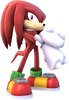
Project+ is a successor to the gameplay modification of the Brawl mod Project M (based on Legacy TE) with the aim to improve the balance among the cast by making small moveset changes to all or most characters. Project+'s development started in 2018, and version v1b was released in April 2019. On March 17, 2020, Project+ 2.0 was revealed with additional content, such as new modes, revamps to some characters' movesets such as Bowser getting a new fireball attack and Charizard getting Thunder Punch, and the reveal of Knuckles the Echidna as the only new playable character beyond what Project M had. Project+ 3.0 was released on June 24, 2024. The most recent update is v3.2.
Shortly after its initial release, Project+ received high levels of popularity among players. By April 8th, 2019, Project+ had received 100,000 downloads on its primary site alone.[1] Competitively, the mod eventually became the main version to play on, effectively replacing Project M.
Changes from Project M and Legacy TE[edit]

Like its predecessors, Project+ focuses on improving the overall gameplay. The mod has been updated to Version 3.0, bringing many significant changes from its initial release.
One of the biggest changes, which is the main focus of Project+, is the significant removal of various bugs and memory leaks featured in version 3.6 of Project M. These bugs are universal and pertain to either stages, movesets, alternate costumes, sounds, or previously outdated codes used in Project M. While Project+ still has a few bugs, they no longer impact the overall performance as easily as they did previously, thus reducing crashes and freeing a large amount of memory. Tourney mode, which previously redirected to the Rotation mode due to glitches, is now replaced by a debug mode.
Thanks to the mod's bug fixes and memory expansion, new features have been included and can be expanded upon:
- An expanded music list, bringing the standard to a total of over 500 songs. In addition to the music found in Project M, songs from other games are included as either new arrangements or from their original source. These include songs from Paper Mario and Pokémon Mystery Dungeon, as well as unused tracks in Brawl's files such as "New Age Retro Hippie" from EarthBound.
- An expanded number of the items that appear in the game, with numerous returning from Melee. Among them include Poké Ball Pokémon like Articuno and Zapdos, which act as alternatives to Moltres, and even Assist Trophy characters like the Goomba as alternatives to the Hammer Bros., functioning identically as they did in Melee's Adventure mode and The Subspace Emissary; unique to the Goombas is that they can also be found within any Container, just like in Melee. Additional items include the Flipper from Balloon Fight and a variant of the Screw Attack based on its Melee interpretation, where it acts as a throwable item instead of as a badge. New items include the Double Cherry from Super Mario 3D World, which creates a functional duplicate of the fighter who picked it up that mimics the player's movements.
Additionally, Roy, Knuckles, and Mewtwo are unlocked in The Subspace Emissary after defeating Tabuu.
As mentioned by the development team, most of the changes are merely aesthetic. Noticeably, the character select screen now features a new HUD with diamond-shaped portraits, matching the theme of Project+. The names of the characters are now completely omitted. All characters have original artwork for their select portraits, with their alternate costumes also sharing the same pose rather than having unique poses per costume, with the exception of Samus, Zero Suit Samus, Kirby, Pikachu, Ganondorf, and Mr. Game & Watch, as was the case with Wario's costume in Brawl. Additionally, every fighter now has a standard of 18 costumes, with 16 in the base and two hidden skins accessible by holding R or Z.
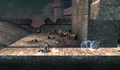 Roy in Subspace.
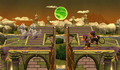 Mewtwo and Diddy Kong using the Double Cherry item in Venus Lighthouse.
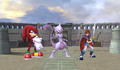 Mewtwo, Roy, and Knuckles trophies in Project+.
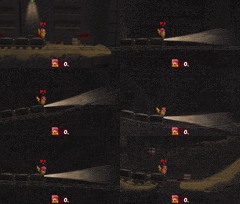 Minecart Madness in Project+.


Characters[edit]

Project+ retains the same roster as Project M, albeit with the addition of Knuckles from the Sonic the Hedgehog series. All of the characters received balance changes based on input from the competitive Project M community. Characters previously considered low tier were given better tools to help with their viability while characters previously considered high tier were nerfed to bring them closer to the rest of the cast. Additionally, certain aspects of characters deemed oppressive or frustrating by the community were balanced in an attempt to alleviate such issues while still maintaining the appeal it had to players who had used it.
The mod marks the first time where characters have had their default designs significant revamped, with three of them no longer using their given Brawl designs. Samus (whose design was changed to a combination of her design seen in Metroid Prime and Metroid: Samus Returns), Zero Suit Samus (whose design was changed to be similar to her Other M appearance, a concept that was initiallyplanned for Project M), as well as Pikachu, who has a revamped model with additional fur. Many characters received a visual overhaul and major touchups to their alternate costumes in Project+: one of them is Toon Link where his Outset alternate costume was upgraded and given new shirt designs based on charts in The Legend of Zelda: The Wind Waker, and his Linebeck alternate costume receiving the shield design as seen in Phantom Hourglass. The Shiny color schemes of characters like Charizard and Mewtwo now have an aesthetic effect where they sparkle like in the mainline Pokémon games during their respective intros. Lastly, Roy was given major polygon improvements to smooth out his armor and boots as well being given a cleaner and more red hair texture when compared to Project M 3.6's last revision. Roy was given a trophy which he lacked in Brawl while both Mewtwo and Knuckles had their trophy models changed.
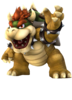

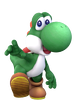

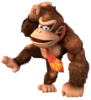

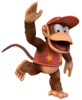
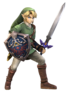


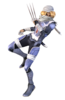

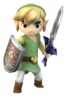


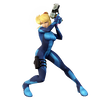
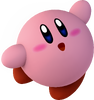

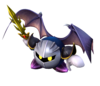
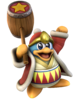


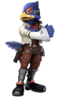







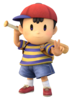


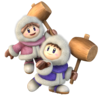
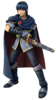

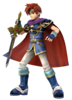
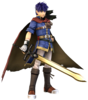






Bold denotes characters not in Brawl.
Stages[edit]

All stages from Project M 3.6 return. Some remain untouched, while others such as Metal Cavern, Luigi's Mansion and Yoshi's Island were given new layouts for use in competitive play. In addition to all the returning stages from Smash 64, Melee, and Brawl, 17 new stages have been added. All stages have 3 alternate layouts or skins to choose from by holding the button shown on the stage selection screen (L, Z and R on a GameCube controller).
The alternate layouts include one for Dream Land set in night, one for Spear Pillar based on the Ultra Deep Sea area of Pokémon Sun and Moon where the Mother Beast (being Lusamine, the leader of the Aether Foundation, upon being possessed by the Ultra Beast, Nihilego) is fought at the climax of the games, one for Green Hill Zone based on Marble Zone from Sonic the Hedgehog on Sega Genesis, one for Sky Sanctuary Zone based on Chaos Angel from Sonic Advance 3, one for Poké Floats taking place in a blue sky and featuring floats of Pokémon like Kirlia and Gengar, one for PictoChat based on the main screen of Mario Paint, one for Pokémon Stadium 2 based on the area where the Kalos Region's champion, Diantha, is fought at the end of Pokémon X & Y, and one for Temple taking place in the Hyrule Castle's courtyard.
Additionally, some stages have extra alts which can be accesed from a menu after pressing L+Start and R+Start on a GameCube Controller. A lot of these stages are unmodified versions of Brawl stages or the original 64 versions of stages that have been remastered. L+Start alts tend to be more casual oriented, while R+Start ones are 1:1 reskins of the default stage of that slot.
| New Stages (12) | ||
|---|---|---|
Golden Temple 
|
Minecart Madness
|
Clock Town 
|

|

|

|
| A stage based on Donkey Kong Country Returns. It is located at the Golden Temple, the ninth and final world of the game. It contains two platforms in the middle with one above the other. | A stage based on the identically named level from the original Donkey Kong Country. It consists of three minecarts that travel through the level stopping at various points. Hazards include barrels and Zingers. This stage was originally intended to appear in Project M. | A stage based on The Legend of Zelda: Majora's Mask, set in the alternate world of Termina, in front of the signature Clock Tower located in Clock Town. The stage has a day-night cycle based on the three-day cycle in Majora's Mask, causing the sky to change as time progresses. The cycle lasts for eight minutes in game time, and restarts after it ends; near the end of the cycle, Skull Kid appears and causes the Moon to come close to the tower. It is based on the Super Smash Flash 2 version of the stage. |
| L-Alt: Temple Tempest, a long stage based on the level from Donkey Kong Country.
R-Alt: A reskin of Smashville. Z-Alt: Jungle Hijinx, similar to the stage featured in later Smash games, although with the background section only. |
L-Alt: The Flying Kroc, long stage that flies around Crocodile Isle.
R-Alt: Fear Factory, a reskin of Wario Land based on Oil Drum Alley. Z-Alt: Oil Drum Alley, a hazard-filled stage based on the factories of Donkey Kong Country. |
L-Alt: Majora's Room, a Battlefield reskin based on the final area of the game.
R-Alt: A reskin of Smashville. Z-Alt: Great Bay, now with swimmable water. L+Start Alt: Great Bay, with no swimmable water like in Melee. |
| Temple of Time
|
Ceres Space Colony 
|
Cookie Country 
|

|

|

|
| A stage based on The Legend of Zelda: Twilight Princess. It is located in the distant past of the Faron region, set directly in the Temple of Time; visually, it's appearance stems directly from Twilight Princess. | A stage based on the same location seen in Super Metroid, which is the first location in the game. In terms of gameplay, it uses the layout seen in the Project M version of Norfair. The background is similar to the arena where the False Samus clones emerge; in the background is a tank containing a Metroid. | A stage inspired by Kirby's Return to Dream Land. It is located in Cookie Country, the first level of the game, specifically the first stage of Cookie Country, where Kirby begins his journey. |
| L-Alt: Bridge of Eldin (Platforms), every 30 seconds, twilight portals appear, teleporting platforms in and out of the stage.
R-Alt: OoT Temple of Time, a reskin of the stage based on the appearance of the Temple of Time in Ocarina of Time. Z-Alt: Bridge of Eldin L+Start Alt: Throne Room |
L-Alt: Tallon Canyon, stage with three platforms based on the location from Metroid Prime.
R-Alt: Ceres Husk, a reskin of Frigate Husk. Z-Alt: Ceres X, stage with a twist: all three platforms are walls, and two are underneath the ledge. |
L-Alt: White Wafers, a wintry stage where meteored opponents can get caught in the thick snow.
R-Alt: A reskin of Fountain of Dreams. Z-Alt: Candy Constellation, stage with a half-pipe design based on the level from Kirby & The Amazing Mirror. |
Bell Tower 
|
Dead Line 
|
Sky Sanctuary Zone
|

|

|

|
| A stage based on the second generation of Pokémon as well as its Generation IV remakes. Ho-oh appears in the background and flies around the city's signature landmark, the Bell Tower, where it must be fought and captured later on. The stage occurs at sunset, referencing the title screen of Pokémon HeartGold. Bell Tower has a large platform that periodically shifts to a nearby building below and then back up again. | A stage based on Sonic Rush. It is located in Dead Line, the seventh zone for both Sonic and Blaze's stories. It has a swinging platform similar to Green Hill Zone, but has a much larger main platform, and four extra platforms, two on each side of the swinging platform, that periodically move around. | A stage inspired by Sonic & Knuckles. It is located on Angel Island, with it being the next zone the player goes to after Hidden Palace Zone. The stage contains two slanted platforms, with the teleporter and signpost from the game appearing in the background. As of version 2.4, its visual appearance has been updated to be based on its appearance in Sonic Generations. |
| L-Alt: Whirl Islands, a reskin of Wario Land based on where the player faces Lugia in the Johto region.
R-Alt: A reskin of Pokemon Stadium 2. Z-Alt: Sprout Tower, the stage is made up of two golden Bellsprout statues in the background, with four platforms on each side. The stage is based on the Beyond Melee version of the stage and was actually considered during the development of Melee. |
L-Alt: Chemical Plant Zone, features a large central platform with two slopes, over which 2 smaller platforms rotate.
R-Alt: A reskin of Green Hill Zone. Z-Alt: Space Colony Ark, a reskin of Sky Sanctuary Zone based on the level from Sonic Adventure 2. |
L-Alt: Pumpkin Hill GHZ, a reskin of Green Hill Zone based on the level from Sonic Adventure 2.
R-Alt: Chaos Angel SS, a reskin of the stage based on one of the final areas of Sonic Advance 3. Z-Alt: A reskin of Frigate Husk. R+Start Alt: Original Sky Sanctuary Zone |
Venus Lighthouse 
|
Dracula's Castle 
|
Subspace 
|

|

|

|
| A stage based on the Golden Sun franchise. In the first game, the Venus Tower is the final location in Isaac's quest to save Vale; the stage takes place on the very top of the tower, where the game's final boss is located. The tower can be seen breaking open with a gigantic sphere of psynergy, referencing the ending of Golden Sun where the tower has been activated. It closes after a few seconds. | A stage inspired by the Castlevania series, being the lair of Dracula. Although it shares its name with Ultimate's version, this stage in particular is specifically based on the castle's appearance in the Dimensional Rift stage of Castlevania Judgment. Originally in Project M, it was removed in version 3.6 due to copyright concerns. It features periodically moving platforms similar to Delfino's Secret. | A stage based on the Great Maze in the Subspace Emissary. It is an amalgamation of the various stages where players must fight Tabuu's false characters. The platforms rotate every few seconds. |
| L-Alt: Mercury Lighthouse, a reskin of the stage with its own tracklist.
R-Alt: A reskin of Yoshi's Island. Z-Alt: A reskin of Wario Land based on Mercury Lighthouse. |
L-Alt: Clock Tower, flat stage which consists of a big gear that rotates inside the Clock Tower. Imported from Castlevania Judgment.
R-Alt: A reskin of Delfino's Secret. Z-Alt: Abbey Ruins, flat stage with a main platform that can be passed from below. Imported from Castlevania Judgment. |
L-Alt: Subspace Ruins, a reskin of Castle Siege based on The Ruins.
R-Alt: Subspace Battlefield, a reskin of Battlefield based on the area Bowser is fought at the end of Subspace (Part I). Z-Alt: Subspace Forest, a reskin of Distant Planet. It's very similar to the area where false Bowser is fought at the end of The Lake, which served as the original version of PM's Distant Planet, though the stage later received changes to its geometry and platforms, which are also reflected here. |
| Returning Stages (49) | ||
|---|---|---|
| Battlefield
|
Big Blue 
|
Bowser's Castle .png)
|

|

|

|
| A returning stage from Brawl. | A returning stage from Melee. | The alternative competitive layout for Bowser's Castle and the original version have swapped, with the alternative layout becoming the default. Both layouts have also received a redesign. |
| L-Alt: Battlefield (SSBM), with its geometry adjusted to match Brawl's, making it a reskin. Features its own tracklist.
R-Alt: Lunar Battlefield, a reskin of the stage with the looks of an out of this world lunar scenery. Z-Alt: Torn Sky Battlefield, a reskin of the stage taking place in the rest area for The Great Maze. R+Start Alt: Duel Zone |
L-Alt: Mute City
R-Alt: Big Blueville, a reskin of Smashville. Z-Alt: A version of the stage with no vehicles and only a single platform. |
L-Alt: Original version of Bowser's Castle, with updated sounds and appearance of the Thwomps and side bricks.
R-Alt: Bowser’s Castle (SMB), a reskin of the stage based on its appearance in the original Super Mario Bros. Z-Alt: World Bowser, a reskin of the stage based on World Bowser from Super Mario 3D World. R+Start Alt: Dry Bowser's Castle, a reskin of the stage with Dry Bowser's blue flames. |
Castle Siege 
|
Corneria 
|
Delfino's Secret 
|

|

|

|
| A returning stage from Project M. | A returning stage from Melee. | Returns with adjusted blastzones and a 5-phase rotation format. |
| L-Alt: Tower of Guidance, a stage consisting of three areas separated by pits between them.
R-Alt: A reskin of Temple of Time based on Castle Siege (Brawl). Z-Alt: Sieged Battlefield, a reskin of Battlefield based on The Battlefield Fortress. L+Start Alt: Castle Siege (Brawl) L+Start Alt: Underground, now a separate stage from Castle Siege. R+Start Alt: Daytime Siege, a reskin of the stage set in daytime. |
L-Alt: Sector Z, completely remade to match Dream Land, Hyrule Castle and Peach's Castle's similar HD remakes from Project M. It's slightly smaller compared to the original Sector Z.
R-Alt: Sauria of Dreams, a reskin of Fountain of Dreams based on Star Fox Adventures. Z-Alt: SNES Corneria, a stage with a retro aesthetic that zooms through the planet as seen in the original Star Fox. Both the bottom of the stage and the buildings cause damage to the player. |
L-Alt: Delfino Plaza
R-Alt: Delfino's Secret Plaza, a reskin of the stage based on Delfino Plaza. Z-Alt: Shy Guy's Toy Box, a reskin of Yoshi's Story based on Paper Mario. R+Start Alt: World 2-3 |
Dinosaur Land 
|
Distant Planet 
|
Dream Land
|

|

|

|
| Returning from Melee, it is a renamed version of Yoshi's Island (SSBM). | A returning stage from Project M. | Returns from Project M with adjusted blastzones. |
| L-Alt: Bowser’s Castle (SMW), a reskin of Bowser's Castle based on its appearance in Super Mario World.
R-Alt: Dinosaur Hill Zone, a reskin of Green Hill Zone. Z-Alt: Cheese Bridge, a stage that feature a moving array of floating platforms, climbable ropes and chainsaws. |
L-Alt: Distant Planet (Brawl)
R-Alt: Valley of Repose, a reskin of the stage based on the 1st area of Pikmin 2. Z-Alt: Distant Cave, a reskin of Delfino’s Secret. |
L-Alt: Winter Dream Land, a snowy reskin of the stage.
R-Alt: Night Dream Land, a reskin of the stage set during nighttime. Z-Alt: Autumn Dream Land, an orange reskin of the stage. R+Start Alt: Dream Land (64) |
| Final Destination
|
Flat Zone 2 
|
Fountain of Dreams
|

|

|

|
| A returning stage from Project M. | A returning stage from Project M. | Completely reworked stage visuals with updated textures, models, and effects. |
| L-Alt: A reskin of the stage inspired by Final Destination (SSBB) but keeping the geometry of Final Destination (SSBM).
R-Alt: PM Final Destination, a reskin of the stage based on Project M concept art. Z-Alt: Interplanetary Final Destination, a reskin of the stage based on the Legacy TE version. L+Start Alt: Final Destination (64) L+Start Alt: Final Destination (Brawl) R+Start Alt: Rainbow Final Destination |
L-Alt: Flat Zone, now has a fixed camera like Flat Zone 2.
R-Alt: Parachute, a reskin of Final Destination. Z-Alt: Manhole, a reskin of Pokémon Stadium 2. |
L-Alt: Sectonia's Gem, stage with a platform in the middle based on Kirby: Triple Deluxe.
R-Alt: Crystal Cave, a reskin of the stage based on the area from The Great Cave Offensive. Z-Alt: Green Greens |