

Project M
- "PM" redirects here. It is not to be confused with Paper Mario or Pac-Man
- For information on Project M's successor, see Project+.

Project M is a gameplay modification of Super Smash Bros. Brawl designed to make the gameplay more closely resemble that of Super Smash Bros. Melee and to a lesser extent Super Smash Bros. Project M's primary change from Brawl is that the speed of gameplay has been generally increased and the character landing lag is shorter, alongside the restoration of many Melee mechanics and elements, such as the addition of Mewtwo and Roy after their absence in Brawl. Project M's development team was partly descended from the original developers for Brawl+, later known as the PMDT, or Project M Dev Team (formerly the PMBR, or Project M Backroom), having members from over ten countries.[1] The first demo was released on February 7th, 2011. Development of the mod officially concluded on December 1st, 2015, with version 3.6 being the last official release of Project M.
Project M has been commonly featured at several national tournaments, such as the Zenith series, The Big House series, and Apex 2014, and it remains the most popular gameplay mod of Brawl in tournament settings. Starting in 2013, Project M saw a rapid rise in its popularity as more characters became playable and the mod became more familiar at Smash tournaments, with the mod's final roster coming by December 9, 2013 with version 3.0. By 2014, it began to develop its tournament scene, with the number of entrants for Apex 2014's PM singles event notably surpassing the number of competitors for the unmodified Brawl. Despite the end of Project M's official development, it still has been able to maintain its tournament presence separate from Brawl, including the formation of its Backroom, the New PMBR, on July 21, 2016.[2]
Project M only supports the North American (NTSC-U) version of Brawl; no official builds for the Japanese (NTSC-J), European/Oceanian (PAL) or Korean (NTSC-K) versions of the original game were ever released. As a result, running Project M on Wii consoles from outside of the NTSC-U region either requires homebrew in order to allow the Wii console to run the North American version of the game, or an imported NTSC-U Wii console.
Changes from Brawl[edit]

Project M has two different versions: Full Set and WiFi. The former has Stock Control and Input Assistance as new features, which allows newer players to use advanced techniques better and have a stock advantage over experienced ones. However, Replays and online play do not work properly as a result of L and R button light-presses causing online desynchronization. Replays are now functioning with the inclusion of Fracture's replay mod. The WiFi version allows these two things to work properly, and while it keeps the former version's battle features, these are not implemented for online play, likely because Stock Control would have caused potential griefing within matches (by the distant opponent always choosing the maximum amount of stocks). If a Project M replay is in regular Brawl, it may cause malfunctions when beginning a match, possibly because of the stage replacement.
Both versions massively alter the original Brawl gameplay to more closely resemble that of Melee, along with other changes to make the game more competitive in general. It retains the techniques Brawl has, such as crawling, wall cling, and DACUS.
Melee based changes[edit]
The following mechanics have been altered to match their Melee forms:
- General amount of hitlag is reduced.
- No buffering by default, though players can turn on Input Assistance to implement a three-frame buffering window for helping newer players master advanced techniques, replacing the "Damage Gauge" option. Online matches instead have a different Buffer option that replaces handicaps, from 1 to 30, with these numbers being the respective amount of buffer frames.
- All characters have faster falling speeds and gravity (except Sheik who has lower gravity). Gravity also no longer adds onto the knockback formula.
- Traction was increased across the board although a few characters including Squirtle and Lucas have lower traction.
- Air dodging applies a directional boost and causes helplessness, making it riskier for midair combat, but allowing faster midair movement within short ranges and restoring the wavedash techniques vital for most characters' metagames.
- L-canceling halves landing lag when a shield button is pressed 7 frames before landing, thus restoring the SHFFL technique, bolstering characters' midair movement and allowing much better usage of combos. Additionally, characters briefly flash white upon performing a successful L-cancel.
- Dash dancing's timing has been reverted, making it longer and more practical, and characters can shield during an initial dash.
- Crouching cancels the running portion of the dash, allowing quicker, more varied options after dashing.
- Characters retain the full momentum of their dash if they jump forward. This is especially noticeable with characters with faster dashing speeds.
- Crouch canceling reduces knockback, and hitting the C-Stick down while crouching uses a down smash (in Brawl it used a down tilt), allowing to efficiently counter opponents by crouching.
- Consecutive jabbing is removed.
- Double jump canceling reimplemented for characters with slow but high double jumps. For some characters, double-jump canceling can be bypassed by holding the jump button while attacking.
- Ledge teching reimplemented, allowing recovering characters to survive at higher percentages by DIing toward a ledge and teching into it upon being attacked. Ledge-canceling is once more possible as well.
- Jumps can be canceled with grabs, so regular grabs can still be effectively used after a dash, avoiding the usual ending lag of a dash grab.
- Powershielding can reflect projectiles during the first 2 frames.
- Shieldstun formula reverted. Like in Melee, characters now also take longer to act out of a shield drop (almost twice as long as in Brawl), causing the gameplay to be less defensive-focused.
- Ledges cannot be auto-sweetspotted, so they can neither be grabbed from the back, nor during the attacking portion of recovery attacks. Some moves like Raptor Boost or Bowser Bomb still use this feature, though. Additionally, characters can act out of a ledge grab sooner, and when performing any ledge recovery action (normal get-up, jump, roll or attack), other characters cannot grab it until the animation is half-finished. This makes edge hopping and edgehogging easier.
- Hitstun canceling has been removed, causing overall horizontal survivability to be shorter, but giving characters more extensive combo options, which were almost nonexistent in Brawl. Air dodges are no longer usable when tumbling.
- It is once again possible to DI moves which do not put opponents into tumble.
- Teching can be performed even before a character is struck, making it easier to implement.
- Items cannot be grabbed during dash attacks or aerials.
- Grab aerials cause helplessness if they miss a ledge, but can be used after an air dodge with the shield + attack combination. They still act as tether recoveries, though they won't restore a character's midair jumps if they drop from the ledge.
- If a character still in hitstun is struck again in quick succession, the new knockback either replaces the old knockback (if the gap between the attacks was 10 frames or less) or has its direction and power combined with the old knockback (after 10 frames). In Brawl, whether to replace the old knockback is based on the relative strength of the two attacks, and no merging is performed.
- All characters have the same meteor cancel window although all characters must wait for 16 frames before meteor canceling as opposed to 9 (all characters have the same meteor cancel window as Ivysaur, Olimar, and Zero Suit Samus did in Brawl). Attempting to do this earlier results in the character not being able to meteor cancel during the entire hitstun of the attack (except if not done with a jump input). The game will also only allow characters to meteor cancel moves with an angle between 260°-280° (like in Melee) making any moves with an angle sharper than 280° a spike (and thus impossible to meteor-cancel). Many moves had their angles altered to be sharper than 280° to make them spikes.
- When dash grabbing a foe, forward momentum is completely negated. Unlike in Melee, though, characters with low traction still possess this feature.
- Grab released characters will get back their midair jumps. Additionally, grab releases function the same as in Melee so characters cannot be forced into an air release and air released characters can act as soon as the grabber can which benefits and hinder certain characters.
- Pummels reverted to all having the same standardized speed and dealing 3% damage per use, with only a few exceptions.
- Grab physics reverted: characters can grab opponents behind them, though they cannot be grabbed by the lower legs or arms.
- Characters hit when lying on the floor will bounce a short distance and then get up automatically upon landing, or will assume their falling animation if they bounce too high or away from the platform, removing locks, but allowing opponents to perform jab resets.
- Though a barely noticeable change, smash attacks are now chargable for 59 frames as opposed to 60, and a fully charged smash deals x1.3671 of the uncharged amount.
- Stale-move negation now uses Melee's reduction factor, though multi-hitting attacks only count once towards the 9 move queue. The freshness bonus from Brawl is also removed.
Brawl based changes[edit]

Aside from Melee restorations, the following techniques and mechanics from Brawl have also been changed:
- Footstool jumps are still present but are now done with a taunt input to avoid unintentional footstool jumping with the jump button.
- Removal of random tripping as a result of tapping the control stick. There is still forced tripping, but only for attacks that always cause it, such as getting hit by or running into a Banana Peel. Tripping can additionally be teched, so punishing a tripped character is more tech chase-orientated.
- Dashing is easier to perform than in Melee, particularly when dashing in the opposite direction a character is facing, since the input for a smash turn is a 2 frame window, instead of 1.
- Short hopping is easier to perform with all characters. Characters leave the ground 1 frame later while still being able to input an aerial, allowing for some aerials from Melee characters to auto-cancel earlier or hit shorter characters when previously impossible (i.e. Ganondorf's forward aerial and Captain Falcon's neutral aerial, respectively).
- Aerials can be interrupted with an air dodge.
- Characters can interrupt their jumping animation after jumping from the ledge much sooner than in Melee, preventing "tournament winners" as a result of being stuck in the ledge jump animation.
- Brawl's 2 frame B-reversing window is retained. B-reversing now also includes moves that previously did not have it in Brawl, such as Captain Falcon's Falcon Kick.
- It is now possible to pivot grab during any portion of the dash like in Brawl.
- Reverse aerial rush reinstated, allowing characters to use their back aerials more efficiently.
- Time window to input a DACUS successfully is now 2 frames, and using Z instead of A does not reduce the window. Kirby, Donkey Kong, and Diddy Kong can no longer DACUS as they have unique dash attacks which can go off ledges although this only negatively effects Diddy. Some characters who previously had an ineffective DACUS now have a more effective and useful DACUS although the average length of a lengthy DACUS is significantly shorter than in Brawl.
- Ability to use to the C-stick to dash attack and up smash during a dash retained, making it easier to perform sliding up smashes and DACUSes.
- Tether recoveries reimplemented instead of reusing Melee's wall grapples; however, they are better than before. Tether recoveries now ignore edge-hoggers; characters will still latch onto the ledge without affecting them, and when pulled up they will perform an automatic jump get-up. While characters with tether recoveries will fare better on the ledge than in Brawl, the jump get-up has extreme lag and puts them into helplessness if they do not land on the stage. Also, a missed tether recovery causes helplessness like wall grapples.
- All up special moves (except for Mewtwo's Teleport, R.O.B.'s new Robo-Booster, King Dedede's Super Dedede Jump, and Meta Knight's Shuttle Loop) now allow characters to grab the ledge backwards before putting them into helplessness or otherwise shortly before their descent. This is opposed to a select few in Melee. Some side special moves (such as Captain Falcon's Raptor Boost, which retains its ledge sweetspot from Brawl, as well as Falco's Falco Phantasm) exhibit this trait as well if they slightly overshoot the ledge from behind.
- The grab release glitch is now an intentional feature used as a balancing tool for select characters. It has been altered also to remove the victim's ability to air dodge in addition to their up special move, though it also restores all their double jumps.
- A glide toss is doable in midair with an air dodge. Additionally, air dodges still auto-grab items during the first frames of execution as in Brawl, so that item-based attacks are easier to counter.
- Gliding is no longer performed by tapping and holding the jump button; Charizard and Pit have new special moves that allow them to glide instead. Meta Knight and Pit also have a timer for their glides, instead of being able to glide infinitely. Glide attacks also have high landing lag and leave these characters helpless.
- Infinite armor is now only reserved for Ike's fully charged Eruption, all of Bowser's smash attacks (when charged a certain time), Ganondorf's Flame Choke right before the explosion, and "grab armor." Armor for other moves that have it is given knockback-based armor; if an attack's knockback is lower than the specified amount of an armor, no knockback is inflicted, but if it is higher, knockback will be regularly inflicted as usual. Yoshi's double jump is an exception to this rule, having knockback reduction frames rather than standard armor frames; therefore, overcoming its armor will result in Yoshi receiving the difference in knockback instead of the full knockback from the move that hit him out of it. Some characters feature color overlays to indicate such armor, with more opaque overlays generally indicating stronger armor.
Other changes and gameplay tweaks[edit]


- All characters and stages are unlocked from the start. However, any character not unlocked in the unmodded game will have "Challenger Approaching" events once the conditions are met. Anything unlocked in Project M will carry over to Brawl.
- Stages such as Metal Cavern, Kongo Jungle and Dream Land replace stages such as Mushroomy Kingdom, 75m, and Green Greens.
- From v3.5 onwards, Screen KOs are about as long as Star KOs, and still uses Brawl's animations.
- Smash 64's taunt canceling returns.
- Brawl's random input delay is fixed.
- Glancing Blows are no longer possible; they have no visual effect to indicate that they have occurred, and will not add hitlag or half the damage of the attack to the defender.
- Stock Control added, replacing handicaps. Players can now control the number of stocks each player starts with before battle, from 1 to 30 stocks for each individual character. A Crew mode has been added in which the game keeps track of stocks retained after battles.
- Stage selection menu modified to include built-in stage striking control with the X button (Full Set version).
- While Project M has no light shields, the full set still allows for light presses for the GameCube controller's L and R trigger buttons if they are assigned to "shield"; a light press will activate a character's shield and L-cancels, and a full press will trigger wavedashes and techs.
- New Melee-like designs for the menu and character selection screens, with altered fonts.
- The game, in general, takes less time to load modes, characters, and scenes, and things such as Records can be scrolled through more quickly.
- Brawl mode is now labeled as "Fight!", Special Brawl is "Special Versus", and all other modes and sections containing "Brawl" are replaced with "Smash" (such as Multi-Man Brawl being named Multi-Man Smash).
- Default match type is 4 stock with an 8-minute timer, and Team Attack is turned on by default, similar to the settings of usual competitive Melee matches.
- The timer during matches is placed at the top center of the screen rather than at the top right.
- A time match can be played by just one player, and the default time limit is infinite.
- Altered camera that is capable of zooming out indefinitely and fully rotating around the characters and stages, allowing players to take snapshots without any camera restrictions.
- There are several alterations to Special Versus:
- Stamina Mode has several new variations (which replace the stage selection options), such as having stocks, warping blast lines that take away damage rather than eliminating the player, and regular knockback scaling in favor of fixed knockback. Stamina can also be set up to 990 HP instead of 300.
- "Curry Mode" is replaced with "Turbo Mode", in which all moves can cancel into any other move or action on hit or on shield. Superspicy Curry is replaced with a "Turbo" item that causes characters to act like in Turbo Mode for a short period.
- "Bunny Mode" is moved down to the "status" row from the "head" row (replacing "Reflect Mode") while making room for "0 to Death Mode" (written in-game as "Regen Mode" to fit the available space), which recovers all damage taken after one second of not receiving any hitstun.
- "Angled Camera Mode" is replaced with All-Star Versus, which allows players to use different characters (or costumes) for each stock. This is done by selecting a character, then deselecting them, and selecting the next character. The order of the characters selected become the order they appear in. Required character selections are based on the stock count. If the selections are less than the stock count, the remaining stocks loop back to the first character (so selecting Mario, Luigi and Peach in a four stock match will loop back to Mario in stock four). This would later on officially be a feature in the series with the introduction of Squad Strike.
- Should each player select their characters in All Star VS Mode before turning on Team Battle; the characters will not be forced into their team battle costumes akin to Smash 4. Also, the random option will always use the default costumes of the characters even in team battles.
- Stage selection screen revamped: stages are now ordered at the bottom in a rectangular shape, with the selected stage being displayed at the top. Stages are now also ordered in Pages 1 and 2, and the top background displays Project M.
- The background for victory poses for VS. battles have been altered to resemble the new Training room.
- Independent character icons for Zelda/Sheik and Samus/Zero Suit Samus, with ZSS not having an icon from Brawl's character menu.
- Characters now instantly grunt when hit by a strong attack, as in Melee and 64, while in Brawl they did a second afterward. There are also medium-damage and high-damage groans as well, with most characters using unused voice samples from the Sound Test. Characters now also use voice samples for sidesteps and air dodges, and variable voices for smash attacks.
- Smash Taunts were introduced to more characters, such as Ness and Link, though these are less involved and can be done on any stage.
- Bowser now has his own series icon.
- Characters now emit a spark when wall jumping.
- The cast of characters and background at the beginning of the opening movie is slightly altered, and both it and the title screen now display "Super Smash Bros. Project M".
- Mewtwo and Roy were added as opponents for All-Star mode.
- Training mode now appears as the default Solo mode, and after entering it, the same characters that participated will appear chosen automatically for Group battles. This will trigger a glitch where if a Gamecube controller is not in the P1 slot and any one of Training, Stadium, Events or All Star Mode is entered, then the player starts a match, exits out and enters VS mode, they can control two characters with one controller. Should two Gamecube controllers in the P3 and P4 slots (with no controllers in slots 1 or 2) access either 2-player events, Stadium, or All Star, both controllers can each control two characters at once.[3]
- Home-Run Contest stadium no longer has a protective window, acting like its Melee counterpart. Its online competitive mode has also been added as a co-op mode offline, with records being saved.
- The protective window change would get reverted in Project+.
- No Replay time limit, allowing longer matches to be recorded and viewed.
- Many additional costumes are added for each character, and are shown as "Colors" on the characters profiles. There are now also "Special" costumes for some characters, such as Dr. Mario, Armored Mewtwo, and Melee renditions of several characters, some of which get team colors and changed aesthetics.
- CPU players have reprogrammed artificial intelligence, giving them a greater degree of technical skill, and use more advanced techniques such as wavedashing. For example, Fox can perform short hop lasers and waveshine infinites, while Roy may use the first hit of Double-Edge Dance to extend his recovery. However, the AI is still flawed; CPU players are extremely prone to self-destructing (such as air dodging away from the stage, not aiming for the ledge, or abruptly cutting their recovery short such as Fox's Fox Illusion) and running into extremely slow attacks, such as Falcon Punch. It is also possible to manipulate certain characters to do absolutely nothing or hold their shield repeatedly even after it breaks. Additionally, they still recognize Giga Bowser and Wario-Man (when selected using the shield button on the respective characters) as Final Smashes, attempting to avoid them altogether instead of fighting them.
Characters[edit]

In addition to the many universal changes, every character received several individual adjustments in order to balance the game properly. The roster was largely buffed overall, creating an extensive collection of viable characters with varying playstyles, strengths, and weaknesses. However, certain moves were nerfed to further flesh out some fighters and break their dependence on repeated use of a single move or small set of moves. Some Project M characters are based on their appearances in Melee (such as Captain Falcon and Jigglypuff) while others are modified from their Brawl versions or a mixture of their iterations from both games.
The sourcing of previous versions of a character depends largely on previous attendance and performance, with high tier Melee characters being mostly reverted to their past formats (with some adjustments to add more balance for the other characters). This includes both normal and special moves, properties such as gravity, weight, run-speed and air mobility.
Aesthetic changes such as sound effects and costumes were included in more recent versions such as version 3.0 and were revamped in 3.5 and 3.6.
The entire cast was overhauled to match the physics of Melee. Characters that suffered from weak attributes and movesets in both Melee and Brawl (such as Bowser, Kirby, and Zelda), had their positive attributes from each game merged and are given entirely new and original buffs. Some returning characters, like Ganondorf, were given a completely revamped moveset to reference their abilities from their home series further and to distance themselves from characters from which they are cloned. New characters, such as Sonic and Snake, are given completely original buffs, nerfs and even entirely new moves to increase their variability and versatility.
Giga Bowser, and Wario-Man are optional playable characters, as they are selected if the player holds the shield button when selecting Bowser or Wario on the character select screen.
Based on the Brawl roster of 39 characters, Project M gives Zero Suit Samus, Sheik, Squirtle, Ivysaur and Charizard their own slots on the character selection screen (the latter 3 replacing the Pokémon Trainer) while including Mewtwo and Roy (who were both absent in Brawl) for a total of 41 characters (43 if the Final Smash forms Giga Bowser and Wario-Man are counted). Furthermore, a leaked development build indicated that development on four new characters was in progress at the time of the project's cancellation. This shows a planned total of 45 characters; these characters are Knuckles the Echidna from the Sonic the Hedgehog universe, Lyn from the Fire Emblem universe, Isaac from the Golden Sun universe, and Sami from the Advance Wars universe. Of these characters, Knuckles would later be added in the mod's successor, Project+.
List of characters[edit]
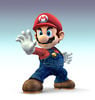

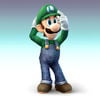
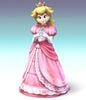
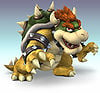







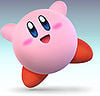

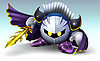
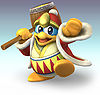
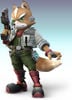




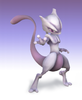


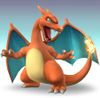
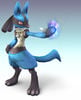
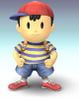




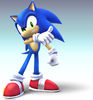
Bold denotes characters not in Brawl.
Stages[edit]

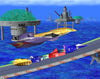
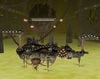
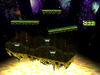
Project M contains 42 stages selectable normally, and 27 alternate stages (that appear in a small preview under the main stage preview and are selectable by holding L before pressing A). Two stages, Peach's Castle HD and Hyrule Castle HD, have a second alternate stage that does not show a preview and is selectable by holding Z instead of L.
Among the normally selectable stages, 3 are original to Project M, 11 are altered layouts of Brawl stages, 6 have minor changes from Brawl, 4 are ported from Melee, 6 are ported from Smash 64 and mostly given HD revamps, and the remaining 12 are unchanged from Brawl (including Past Stages).
Among the alternate stages, 1 is original to Project M, 1 is an altered layout of a Brawl Past Stage, 1 is ported from Melee, 8 are ported from Smash 64, and the remaining 16 are unchanged from Brawl (including Past Stages).
| Stages (42) | |||||
|---|---|---|---|---|---|
| Stage | Changes | ASL | Stage | Changes | ASL |
  Battlefield |
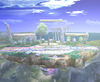
Stage layout slightly tweaked to match Melee's Battlefield. |  |
  Big Blue |
||
  Brinstar |
 |
  Castle Siege |
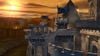
A unique, untransforming version of the stage added in v3.6β featuring a twilight sky reminiscent of Fire Emblem: Radiant Dawn's cover artwork and blue decorations (tiles, flags) rather than red. | ||