

User:sonicSpeed48/amiibo


amiibo (アミーボ, amiibo) are a line of interactive figurines available for usage with the Wii U, Nintendo 3DS, and Nintendo Switch[1] systems. By scanning an amiibo with near field communication technology, players can receive various effects in games. For the Wii U, amiibo are scanned using the Wii U GamePad. The New Nintendo 3DS models are also natively compatible with amiibo, while older 3DS models require an NFC adapter to use the figurines.[2] While the concept of figurines using NFC technology to interact with the Wii U was previously explored with Pokémon Rumble U, Super Smash Bros. 4 was the first game to feature the amiibo branding, acting as the debut and flagship title for the line.
As of September 2016, Nintendo reports that 39 million amiibo figurines have been sold, along with 30.6 million amiibo cards.[3]
In Super Smash Bros. 4[edit]

Super Smash Bros. 4 supports the use of amiibo, with its series of figurines representing the various characters available for play in the games. All playable characters are represented. Some alternate costumes, such as male and female Corrin, have separate amiibo available. Others, such as Alph for Olimar, do not. amiibo figurines are not required to unlock any characters or other features in the games, and they are completely optional for playing both versions.[4] amiibo can also be used on any copy of the game (even if the character has not been unlocked or downloaded), and the character on the amiibo is tied to the figurine, allowing for players to use its customized moveset and fighting style wherever they desire.
amiibo, when scanned by the console, allow the character represented by the figurines to be used in-game as a customized CPU opponent. Any amiibo figure corresponding to a Smash character may be used, not just the ones released in the Super Smash Bros. amiibo series listed below. The in-game character can be modified by players with character customization options. Unlike normal fighters, amiibo fighters' stats are modified by "feeding" them equipment, including equipment the character cannot normally use; for example, an amiibo Mario can be given Hammer equipment, which would normally be impossible. There is a limit to how many times the amiibo can be fed before battling, however, and any equipment that's given to an amiibo is permanently lost. An amiibo can also "learn" up to three bonus effects from the equipment they are given. By default, the amiibo's stat total is capped at 120. As with other player-designed custom sets for characters, amiibo can be assigned a name and a specific alternate costume as well.
After this, they can be used as a specialized computer player, with the tag "FP" (Figure Player) above them. Figure Players start at level 1 like regular CPU players, but as they fight more often, they can continue to level up, to a cap of 50. As they gain levels, amiibo can potentially "learn" techniques from other characters: if a player frequently uses long-ranged, camping techniques, then the amiibo will also begin to emulate this behavior. This learning continues even after the 50 level cap is reached. In addition, an amiibo can gain improved fighting statistics, such as improved damage, knockback, and reaction times, the higher its level is. Finally, higher-leveled amiibo can adapt to individual matches faster than lower-leveled amiibo; if an opponent takes on an aggressive, rush-down style against an amiibo in one match, for instance, it will begin to make more use of defensive techniques like spot dodges and rolls. However, even high-level amiibo may have their flaws on complex stages, like walking back and forth before fighting on stages like Gaur Plain.
amiibo also gain gold and other items while fighting, which are retrieved when checking them in the amiibo menu. Aside from gold, players may also receive custom parts or trophies. The longer the amiibo has fought, the more presents and gold are received. These items can be retrieved when the amiibo is scanned on its owner's console under the amiibo menu. While Super Smash Bros. for Wii U natively supports amiibo, Super Smash Bros. for Nintendo 3DS was unable to do so at launch. Version 1.0.5, released on February 9th, 2015, added support for scanning amiibo if the game is played on a New Nintendo 3DS or New Nintendo 2DS, while version 1.0.8, released on June 14th, 2015, added support for an external NFC reader/writer accessory, enabling support for earlier 3DS and 2DS models. The user must have one of these pieces of hardware to use amiibo with the 3DS version.
Owing to their ability to be "trained" and used on other consoles, amiibo tournaments have become a minor side-event at some Smash 4 tournaments.
In Super Smash Bros. Ultimate[edit]
amiibo compatibility will return in Super Smash Bros. Ultimate. All amiibo figures compatible with Super Smash Bros. 4 will be compatible with Ultimate, and figures for newcomers Inkling, Daisy, and Ridley have also been announced.[5] New figures for veterans not present in SSB4 have also been confirmed, including Pichu and Ice Climbers,[6] as well as a figure for Wolf.[7] amiibo data from SSB4 can be transferred to Ultimate. In Japan, the existing lineup of SSB4 amiibo will be re-released in two waves, one on December 7, 2018, and the other in mid-January 2019.[8]
Release[edit]
For Smash, amiibo are released in waves. Several staggered release dates have been announced, with each date containing a subset of the entire Smash lineup. The waves, the figurines they contain, and their release dates are detailed below; waves are listed in their North American sets and dates, although the contents of each wave sometimes vary by region.
Smash-related amiibo are priced at $12.99 in the US, $15.99 in Canada, £10.99 GBP in the United Kingdom, $17.95 AUS in Australia, ¥1200 JPY in Japan, and €14.99 EUR in Europe.
Wave 1[edit]
The first wave of amiibo launched on November 21st, 2014, alongside the North American release of Super Smash Bros. for Wii U.


|

|

|

|

|

|

|

|

|

|

|

|
Wave 2[edit]
The second wave of amiibo was released on December 14th, 2014 in North America and on December 19th, 2014 in Europe.


|

|

|

|

|

|
Wave 3[edit]
The third wave of amiibo released in Japan on January 22nd, 2015, in Australia on January 29th, 2015, and in North America on February 1st, 2015. In North America, several of the amiibo are exclusively available through specific retailers.
In Europe, Wave 3 was split in two. Bowser, Ike, Lucario, Rosalina & Luma, Sheik, and Toon Link were released on January 23rd, 2015, while King Dedede, Mega Man, Meta Knight, Shulk, and Sonic were released on February 20th, 2015.


|

|

|

|

|

|

|

|

|

|

|
| Retailer exclusivity | |
 Lucario |
Toys "R" Us exclusive at launch 
|
 Meta Knight |
Best Buy exclusive at launch
|
 Rosalina & Luma |
Target exclusive at launch 
|
 Shulk |
GameStop exclusive at launch EB Games exclusive at launch 
|
Wave 4[edit]
The fourth wave of amiibo was released in Japan on April 29th, 2015 and in North America on May 29th, 2015. This was the first wave of amiibo that included unlockable characters. In Europe, this wave was released in two portions, with Charizard, Lucina, Ness, Pac-Man, Robin, and Wario released on April 24th, 2015 and Greninja and Jigglypuff releasing on May 29th, 2015. Like Wave 3, in North America, several of the amiibo are exclusively available through specific retailers.
The Pac-Man amiibo is reported to be sold exclusively at Best Buy on October 19, 2018, in line with the upcoming release of Super Smash Bros. Ultimate.


|

|

|

|

|

|

|

|
| Retailer exclusivity | |
 Greninja |
Toys "R" Us exclusive at launch
|
 Jigglypuff |
Target exclusive at launch Walmart exclusive at launch
|
 Ness |
GameStop exclusive at launch EB Games exclusive at launch
|
Wave 5[edit]
The fifth wave of amiibo was released in Europe on June 26th, 2015, in Japan on June 11th, 2015, and in North America in late July 2015, with Dark Pit releasing on July 31st, 2015, and Palutena releasing on July 24th, 2015. This wave also included Palutena as the first amiibo to be exclusive to an online retailer in North America, as well as being the only wave containing only exclusives in North America.


|

|
 Dark Pit |
Best Buy exclusive at launch Gamers and El Palacio de Hierro exclusive at launch 
|
 Palutena |
Amazon exclusive at launch
|
Wave 6[edit]
The sixth wave of amiibo was released in North America on September 11th, 2015, in which the following amiibo were available: Zero Suit Samus, Olimar, Bowser Jr., Dr. Mario, and Ganondorf. In Europe and Japan, Ganondorf and Zero Suit Samus released alongside Wave 5, and Dr. Mario, Bowser Jr., and Olimar were released on July 17th, 2015, with the remainder of the wave releasing in September 2015. R.O.B., Mr. Game & Watch, and Duck Hunt were bundled together as a "retro 3-pack" in North America and released exclusively at GameStop on September 25th, 2015 in North America and were individually released on October 29th, 2015 in Japan. This was the final set of amiibo featuring starters. The Mr. Game & Watch amiibo features multiple, swappable poses.
 Mr. Game & Watch's multiple poses.
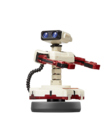 R.O.B. (Japan)
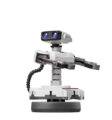 R.O.B. (international)


|

|

|

|

|

|

|

|
| Retailer exclusivity | |
 Bowser Jr. |
Toys "R" Us exclusive at launch
|